
Reviewed 25 September 2026 · Prices and availability should be confirmed before booking.
A full body massage in Da Nang can be arranged at your accommodation when you want a broad, relaxing treatment without traveling to a spa. “Full body” describes the intended scope, but it does not tell you how much time each area receives, how firm the work will be, or which products are used. Those details should be agreed before the therapist starts. This guide walks through the likely sequence, the choices you can make, and the limits of what a wellness massage can claim. The package information cited here was checked on 25 September 2026.
What does full body mean in a practical appointment?
A full-body session generally aims to include several major areas rather than concentrating all the time on one spot. The exact sequence depends on the provider, duration, draping or clothing arrangements, and your preferences. Ask which areas are normally included and which can be omitted. Some guests want more attention to the back and shoulders; others prefer a gentle pace across legs and arms. A clear request is more helpful than assuming every minute will be distributed equally.
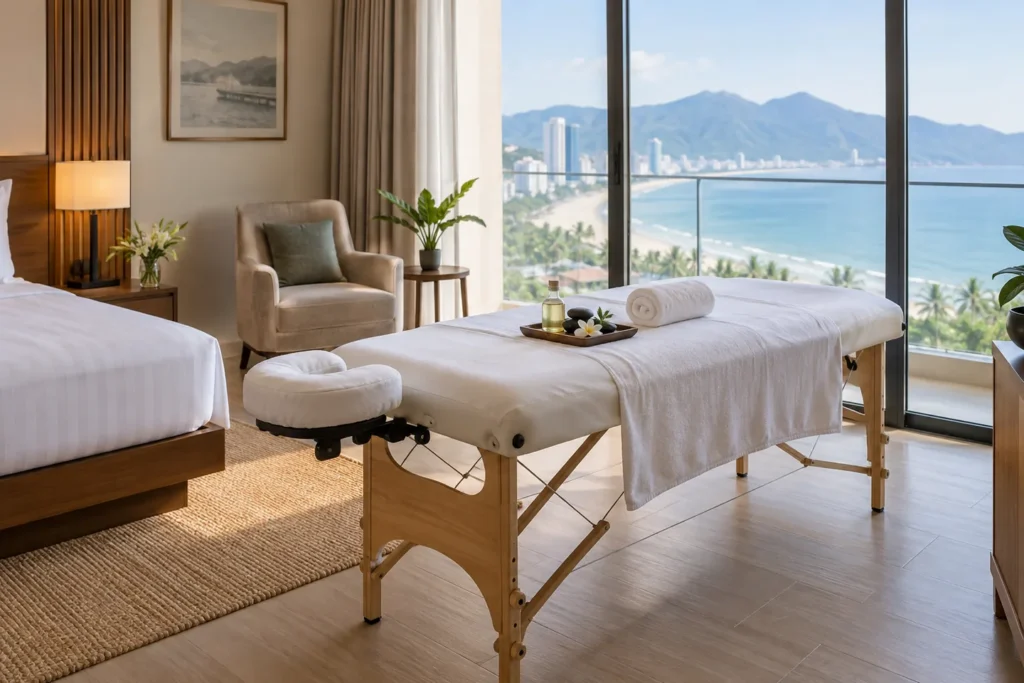
If you have never booked a home session, ask how the therapist plans to work in your room. Will there be a portable table? What fresh linen is supplied? Where can you change or secure your belongings? A professional setup should respect your privacy. You are entitled to say that an area is off limits and to request an adjustment in pressure. The goal is a comfortable service delivered with consent, not a prescribed routine that every guest must follow.
The service list describes the provider’s Body Massage as a relaxing full-body treatment. The broader benefits stated in promotional copy should be read as service intent, not as proof of a medical effect for every individual.
How does a session usually unfold?
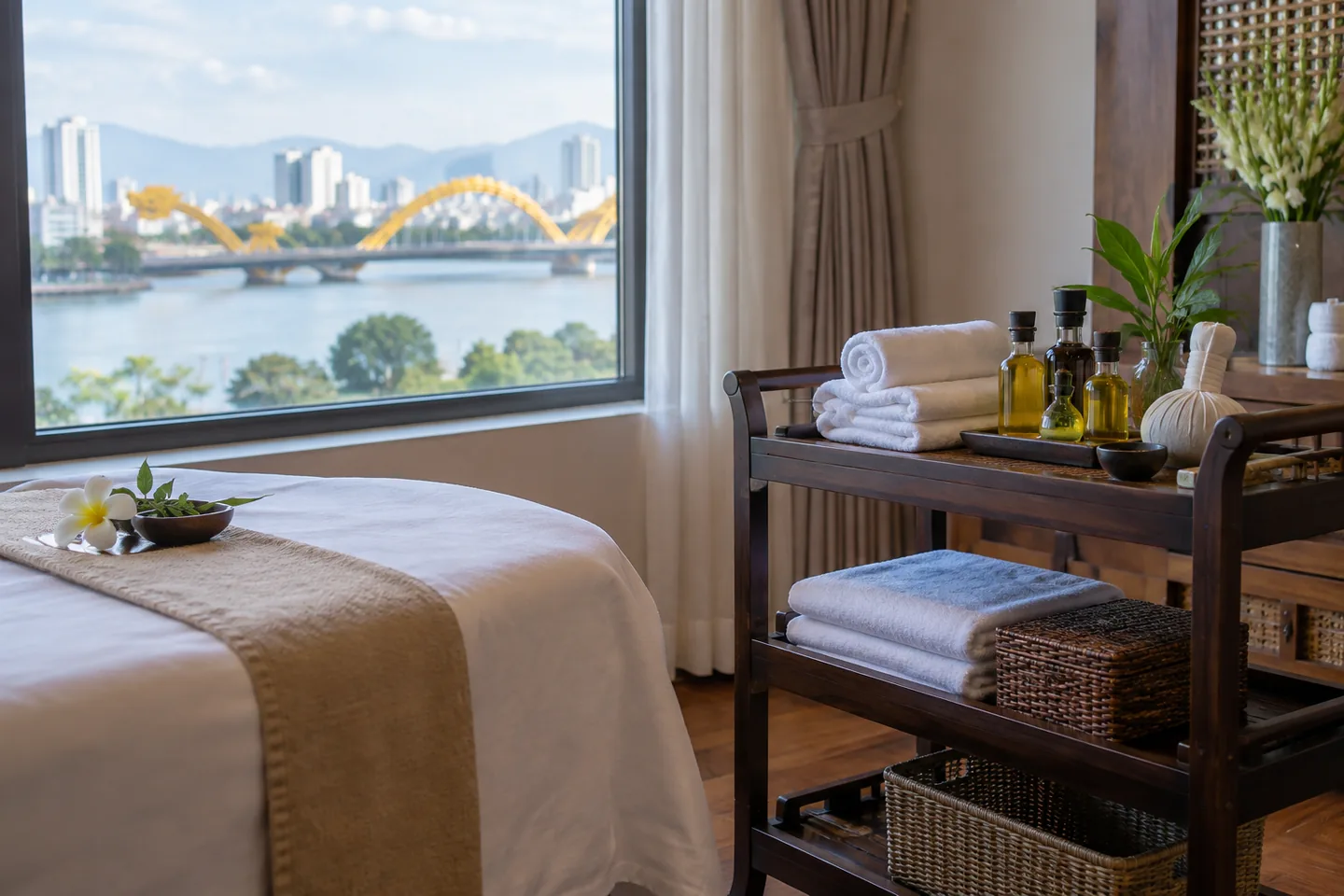
Plan a few minutes for arrival, equipment setup, and a conversation about pressure and areas to avoid. The booked treatment time and the total time the therapist is present may differ, so ask the provider how it counts the session. Once the room is ready, the therapist can guide you on positioning and draping. If an oil is used, ask what it is and whether an alternative is available if you dislike scent or have a sensitivity.
During a full-body session, the therapist may change areas and techniques as time permits. You should not have to tolerate sharp discomfort or wait until the end to give feedback. Ask for a lighter approach, a position change, or a pause whenever needed. If you prefer conversation to a minimum, say so at the start. The therapist may still need to check in about pressure and comfort.
At the end, allow time to sit up slowly, get dressed privately, and settle any agreed payment. A home visit lets you rest where you are after the treatment. If you have a tour, flight, or checkout soon afterward, leave a sensible buffer for setup and departure rather than scheduling the session edge to edge.
Is 60 minutes enough for full body massage?
Sixty minutes can work for a broad introduction, but time is finite. If you want a full-body sequence and substantial attention to one problem area, ask whether 90 minutes would fit the plan better. The website’s Standard package is 60 minutes and mentions a full-body massage. Its Pro package is 90 minutes and describes a deeper relaxation ritual. These are package descriptions, not a guarantee that a longer session will feel better for every guest.
Make a priority list before booking. If back and shoulders matter most, say that those areas should receive more time and accept a lighter pass elsewhere. If you mainly want a slow, quiet experience, a longer session may allow an unhurried pace. Pressure is independent from duration: a guest can request gentle work for 120 minutes or focused firm work for a shorter time if the provider agrees it is appropriate.
The duration comparison offers a fuller decision framework. Also check the live package menu for current prices and inclusions. Avoid treating duration as a dose of medical therapy; it is primarily a way to allocate time and choose your experience.
Full body versus a focused treatment
A focused neck, shoulder, and back massage gives more of the appointment to those areas. A foot session can be preferable when your main complaint is tired feet after walking. Deep tissue is a style of focused, firmer work, not a synonym for full body. Hot stones and aromatic oils are elements that may be incorporated into a session; ask whether they are part of your selected package. This vocabulary helps you describe what you want without assuming a category name covers everything.
For example, a traveler who has spent a day walking may choose full body for general rest or a foot-focused session if the legs and feet are the priority. An office worker who notices tension after desk work may want a broad session with extra shoulder time. A guest sensitive to heat or fragrance should tell the provider and choose an approach that does not depend on those elements. These examples are preference decisions, not clinical recommendations.
If you are unsure, send a short message about the areas you want included, your preferred pressure, and the time available. The home massage guide explains what else to confirm about your room and building before the visit.
Preparing a comfortable and private space
You do not need a dedicated spa room to receive a home massage. What matters is a clear area for the table and enough space for a therapist to move around it. Before confirming, ask the provider what equipment they bring and how much floor space they need. Move fragile items, loose cables, and luggage away from the working area. A room with a stable temperature, a reachable electrical outlet if equipment requires one, and reasonable privacy usually makes the appointment easier for everyone.
For a hotel room, decide where the table would go before the therapist arrives. A narrow passage between the bed and wall may be less useful than a clear space near the window. In an apartment, a living room can work well if other occupants agree to leave the area private during the session. Keep a place for the therapist’s bag and fresh linen, and ask how used linen will be handled afterward. Cleanliness is a practical question, not an awkward one: you can ask about fresh towels, table covers, and whether oils arrive in clean containers.
Set the lighting and temperature to your comfort rather than trying to copy a spa advertisement. Silence your phone if you wish, but keep it reachable for urgent calls. If you are sharing the room, establish who may enter. The goal is to make a normal living space suitable for a professional service, not to stage a perfect photograph.
Tell the therapist what you want before the session begins
“Relaxing” and “firm” mean different things to different people. Give a practical description instead: “gentle pressure across the back,” “avoid my right shoulder,” or “focus on tired feet for the first part of the appointment.” Mention if you dislike a particular oil scent or prefer an unscented product. A professional can explain which requests fit the booked session and which might require a different service or more time. Speaking up at the beginning is easier than hoping the therapist will infer your preference.
The conversation continues during treatment. Pressure should be adjustable, and a guest can ask for a change or stop at any point. Stronger pressure is not automatically better. If a technique creates sharp pain, numbness, or dizziness, say so immediately. A massage session should be guided by comfort and consent, not by a promise that discomfort is necessary for results. When you book for another person, that person should be able to state their own preferences rather than having them decided by the purchaser.
If you are comparing services, start with the experience you want. A quiet full-body session may suit someone who wants general relaxation; a narrower focus may suit a traveler whose feet feel tired. The service overview lists the treatment categories, while the package menu explains the available time and price. Use both pieces of information when asking for a recommendation.
Understand the package price before choosing a technique
The website currently presents three time-based packages, rather than a separate public price for every massage technique. As checked on 25 September 2026, Standard is 60 minutes at 500,000 VND, Pro is 90 minutes at 650,000 VND, and Premium is 120 minutes at 750,000 VND. The page also lists a 100,000 VND surcharge after 23:00. These are the business’s displayed prices, not a survey of every spa in Da Nang. Check the live package menu before paying or traveling, because offers and inclusions may be revised.
Duration changes the experience as well as the bill. In 60 minutes, there may be time for a general session or a more focused treatment, but not every desired area can receive the same attention. Ninety minutes allows more room for a full-body sequence and extra attention to a particular area. A two-hour booking may make sense if you want a slower pace and additional listed elements, provided the provider confirms they are available for your appointment. More minutes are not a medical prescription; choose according to comfort, schedule, and budget.
Ask for the complete total in writing. Check whether the quoted price includes travel to your building, any after-hours fee, and the treatment elements you expect. Do not assume that a description of hot stones, oil, or a foot soak applies identically to every package. A brief message before booking can prevent a longer disagreement after the appointment.
Health and safety questions worth asking
Massage is a wellness service, not a diagnosis or a replacement for medical care. The U.S. National Center for Complementary and Integrative Health notes that evidence for some pain-related benefits is limited or mixed and advises against postponing medical evaluation because of massage. It also describes rare but serious adverse events, particularly with vigorous work or in people at higher risk. Read its massage therapy overview for the context behind these cautions.
Before booking, ask a clinician whether massage is appropriate if you have a recent injury, unexplained pain, a possible blood clot, a fragile bone condition, or another condition where pressure or heat could matter. Pregnancy, recent surgery, anticoagulant medication, fever, skin infection, or a new neurological symptom are also reasons to seek individual guidance rather than rely on a generic blog recommendation. Tell the provider about allergies or sensitivities to oils and fragrances. For hot stone work, specifically ask about temperature and how heat will be checked.
The practical rule is simple: do not ask a therapist to work through pain or over an area that should be avoided. Stop if you feel unwell. If a symptom is new, severe, or persistent, contact a healthcare professional. The Mayo Clinic overview of massage therapy also emphasizes discussing health conditions with the therapist and care team. These precautions do not make a routine appointment complicated; they help you choose a suitable service and communicate clearly.
What to do after the massage
Give yourself a few minutes to stand up slowly and notice how you feel. People respond differently to touch, warmth, and a change of position. If you feel lightheaded, sit down and tell the therapist. Drink water if you are thirsty, and return to normal activity at a pace that feels comfortable. There is no need to follow a rigid “detox” routine or to assume soreness proves that the massage worked. A pleasant session can be gentle, and an intense one is not necessarily more effective.
If you enjoyed a particular pressure level or disliked a technique, make a note for a future booking. Describe the response in ordinary words: “the shoulder work was too firm,” “I preferred the unscented oil,” or “more time on the legs would help.” That information can make the next appointment more comfortable. If you have unusual or persistent symptoms afterward, seek medical advice instead of attributing everything to a normal treatment response.
For travelers, consider the rest of the day’s itinerary. A session just before a rushed transfer or immediately after a very large meal may be less comfortable than one with a little margin afterward. Hotel guests should allow time to clear equipment from the room and coordinate with reception if a visitor pass was issued. At home, let the room return to its usual use when you are ready; the convenience of the service includes not having to make another journey after it ends.
Frequently asked questions
Does full body massage have to be firm?
No. Pressure is a preference to discuss with the therapist, and you can ask for a gentler approach during the session.
Can I ask to skip an area?
Yes. State any areas you do not want touched before treatment and remind the therapist if needed.
Will I need to provide towels?
Ask what fresh linen and equipment the provider brings; do not assume the setup is identical for every package.
Is a full-body session suitable after a long flight?
It may be a comfortable wellness choice for some travelers, but discuss any new symptoms or health risks with a clinician rather than using massage as an evaluation.
Is oil always required?
Not necessarily. Ask which products are used and whether an unscented or other suitable option is available.
How early should I book?
Ask the provider for availability and allow time to confirm your accommodation access, final price, and preferred duration.
Plan your appointment
A good full body massage Da Nang booking begins with a clear description of scope and comfort: which areas, what pressure, what duration, and what products. Compare the treatments and packages, then confirm the practical details through contact.